
Developing Designers at Scale
From design community to design excellence
Overview
This case study details the successful effort to transform small, tactical volunteer programs for designers into a formalized, scalable system supporting over 5,000 creatives across the company. We shifted from relying on largely grassroots activities to establishing a fully-staffed and budgeted architecture for professional development. By creating the "Operating System for Design Excellence," we replaced scattered programs with a cohesive framework designed to consistently elevate the caliber of talent and drive systematic innovation for all designers and creatives at Amazon.
Role
Lead Executive Producer
Auditing Programs
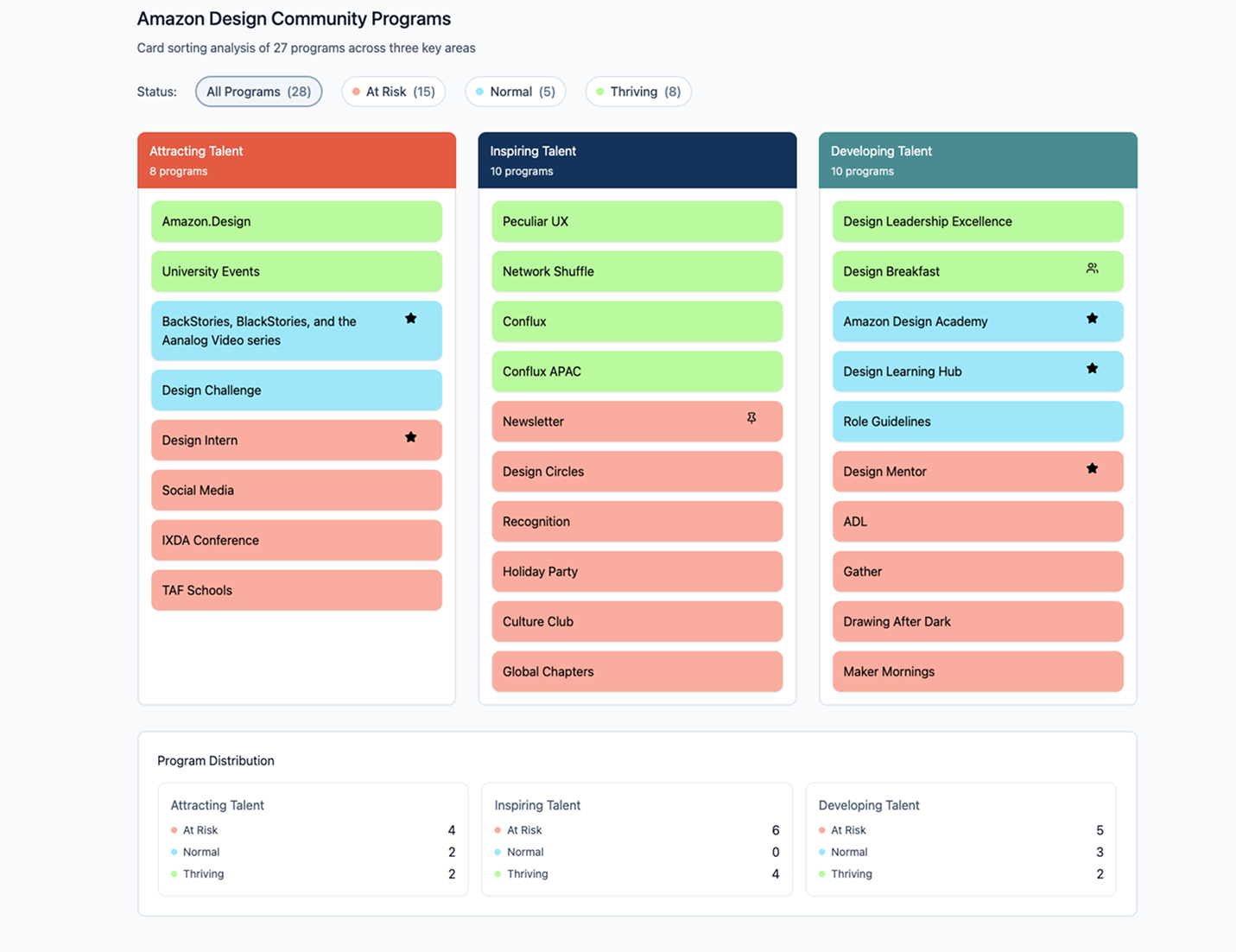
Programs with large impact and affinity scores higher than 85% are green. Blue programs are those that were operational but were either high effort, or under funded. At-risk programs (salmon colored) are either low-performers, niche audience, or operationally challenging (e.g., Design Intern). The star represents programs we believed were worth shoring up.
We discontinued supporting most at-risk programs.
Goals
Ensure Amazon is the best home for creative talent on the planet by working across all lines of business to energize the design community and foster the conditions for design excellence.
Increase designer satisfaction and loyalty.
Enhance employer brand value and reputation.
Systematically elevate design talent across the company.
Team
Timeline
Started with ...
+ 1 Executive Producer
+ 1 Sr Media Producer
+ 1 Sr Diversity PM
26 months total
The Situation
Lessons Learned
Mechanism-Centered: Ensure every program is built on a defined, repeatable, and documented process (the "mechanism") rather than relying solely on individual heroics or charisma.
Value Proposition Clarity: Each program must have a clear "Why should I attend?" for the designer and a clear "Why are we doing this?" for the organization.
Audience Segmentation: Programs should be designed with specific segments in mind (e.g., general Inspiring Talent talk vs. Developing Talent workshop for mid-level UX writers).
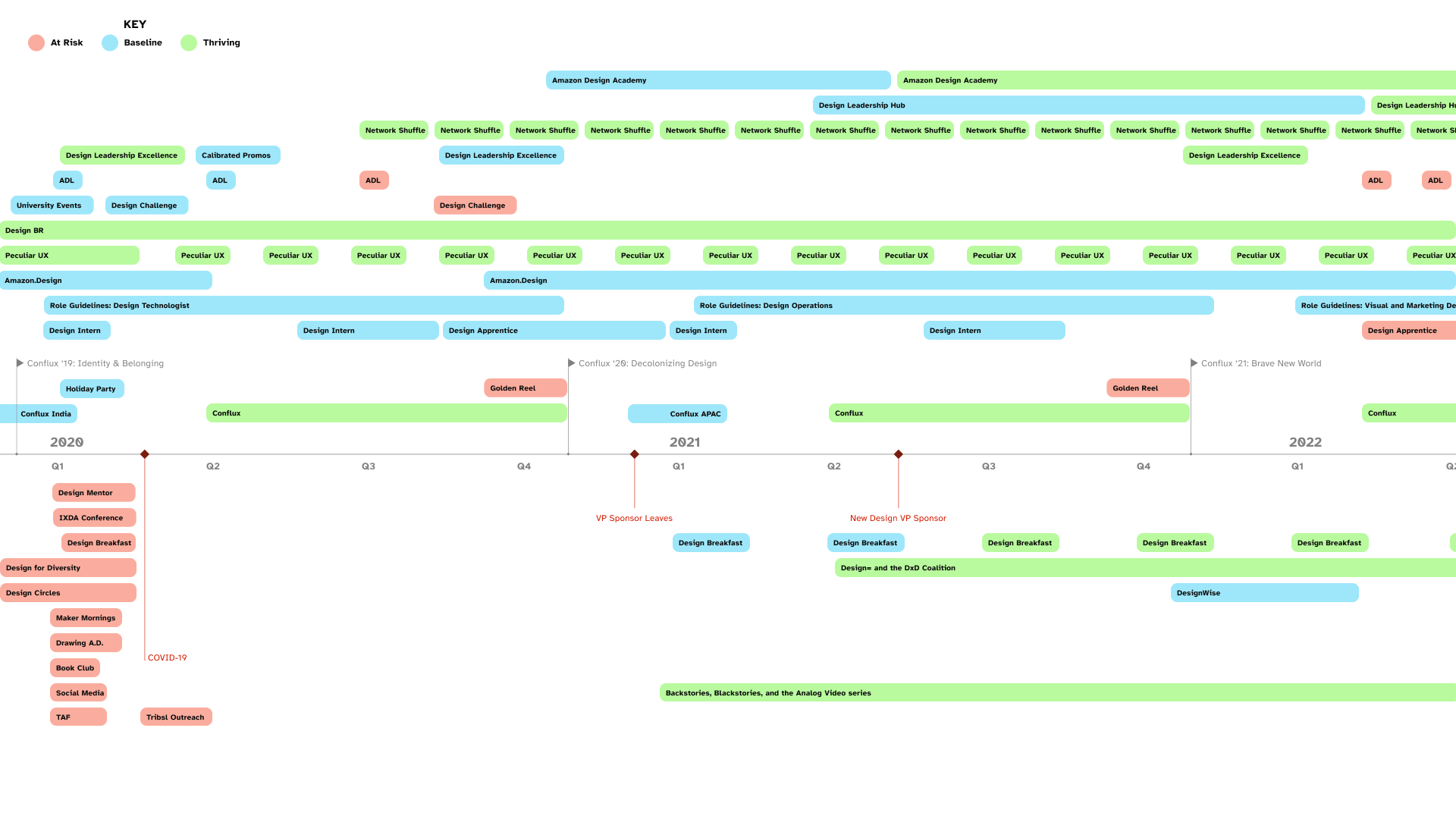
Prior to 2019, Amazon’s community of around 3,500 designers and creatives appeared to be thriving. Powered by charismatic and energetic volunteers and a community working in close proximity to each other. Events were well attended and the vibes were, by all metrics, good. But the community showed signs of fatigue and engagement plateaued in late 2019/early 2020. Past success relied on motivated volunteers with nominal financial support, but this approach was failing due to dwindling commitment, worsened by the massive growth and decentralization of the design population and notable regretted attrition. Diminished trust and lack of interest was compounded by the loss of high-touch in-person events in 2020 as a result of the COVID-19 pandemic.
At one point, the central design excellence team, severely understaffed due to a pair of unfortunate exits, was reduced to one senior producer and myself. Managing over two dozen volunteer programs (some with a monthly cadence) it was clear that we needed to fundamentally rethink community building and create a framework centered on durable, measurable mechanisms (how Amazonian), something I now like to call "the operating system for design excellence." (thank you Rahmin Eslami)
The Approach
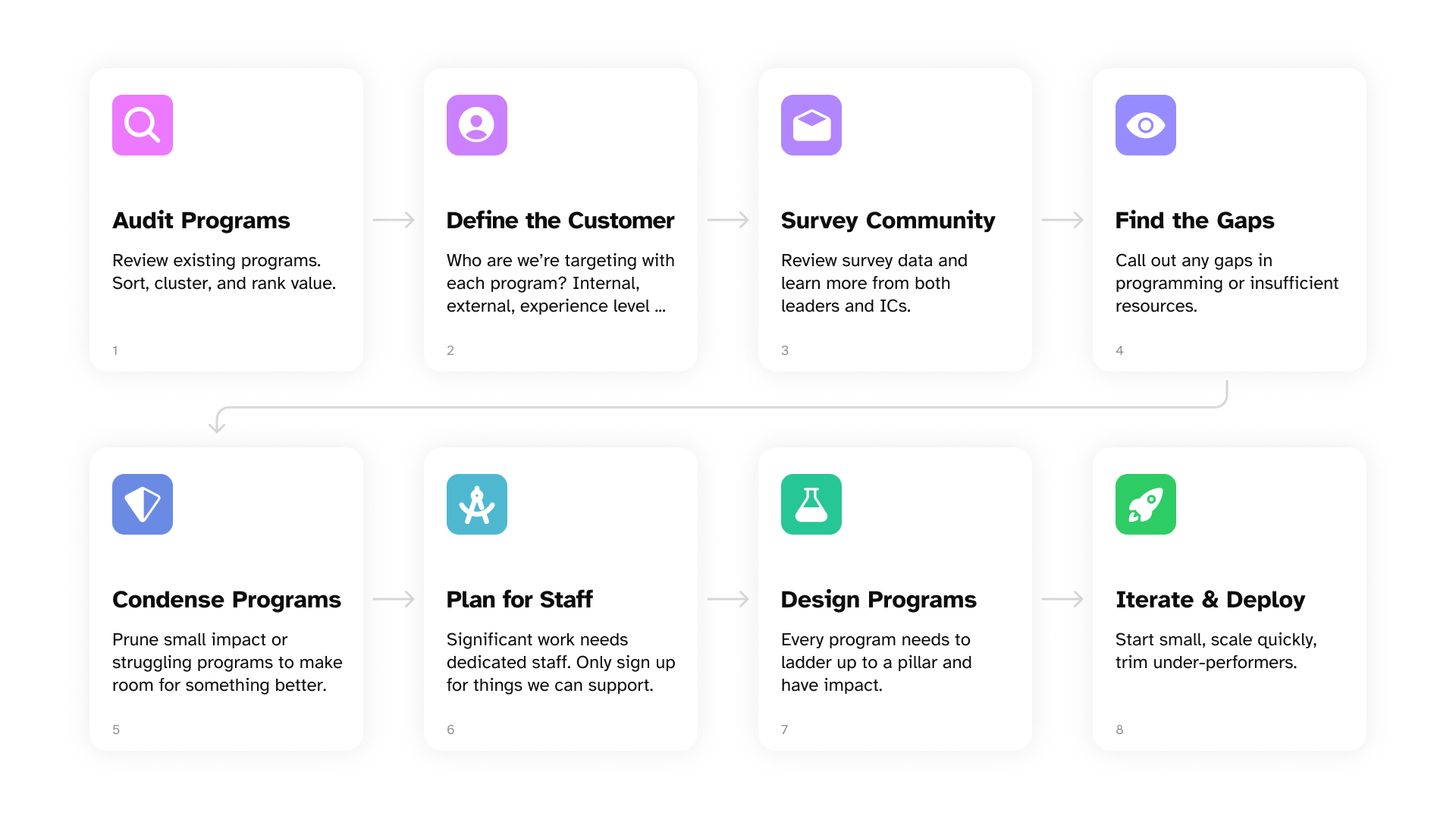
The first step was auditing existing programs and evaluating their impact. Our offerings sorted into three categories: Attracting, Inspiring, and Developing Talent (though the classification was sloppy). Beyond satisfaction data nobody had done a comprehensive review like this.
Ended with ...
+ 3 Sr Program Managers
+ 1 Sr Design Strategist
+ 1 Experience Designer
+ 1 Principal Creative Director
+ 1 Researcher (intern)
and scores of volunteers
Understanding the Audience
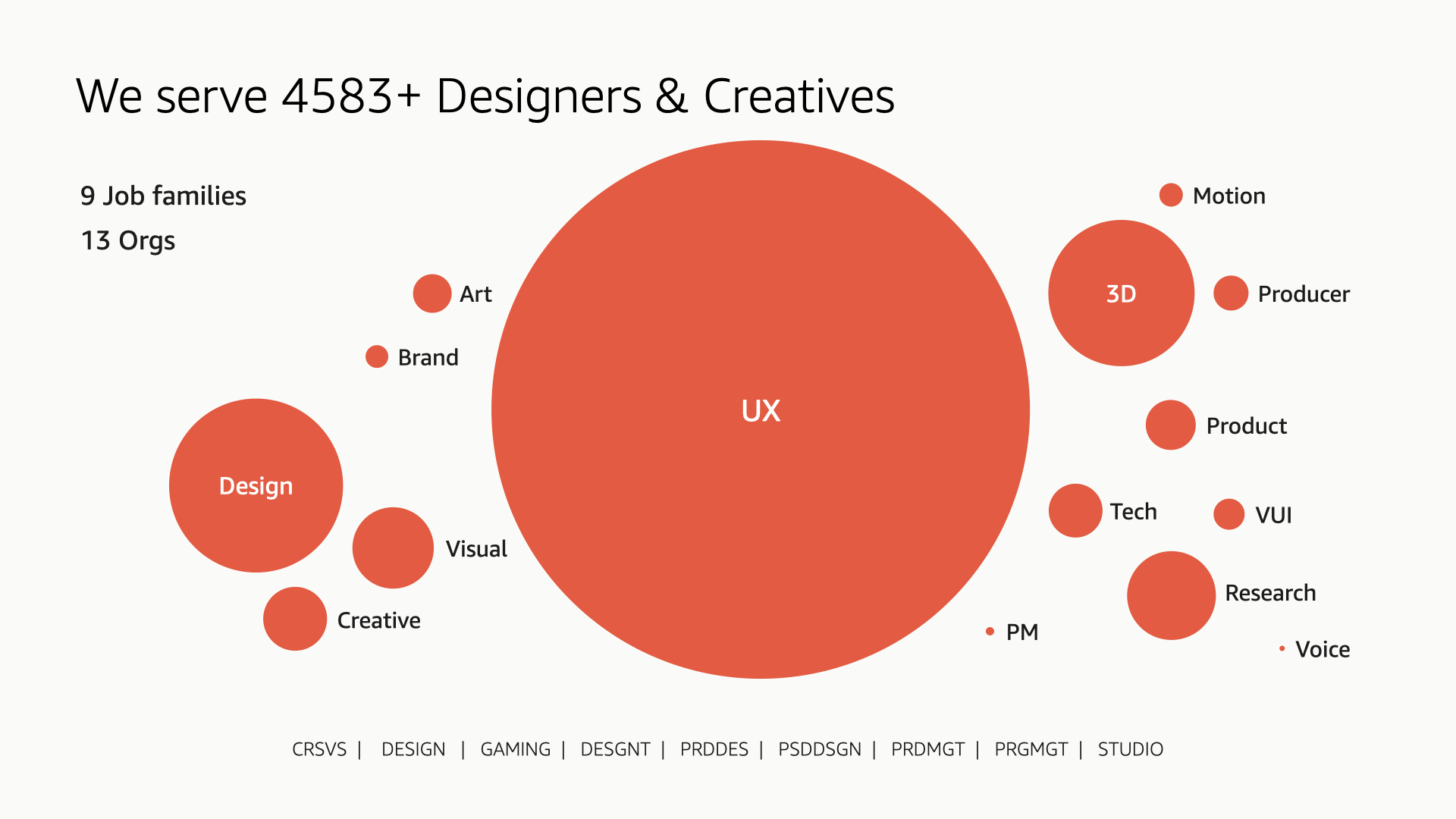
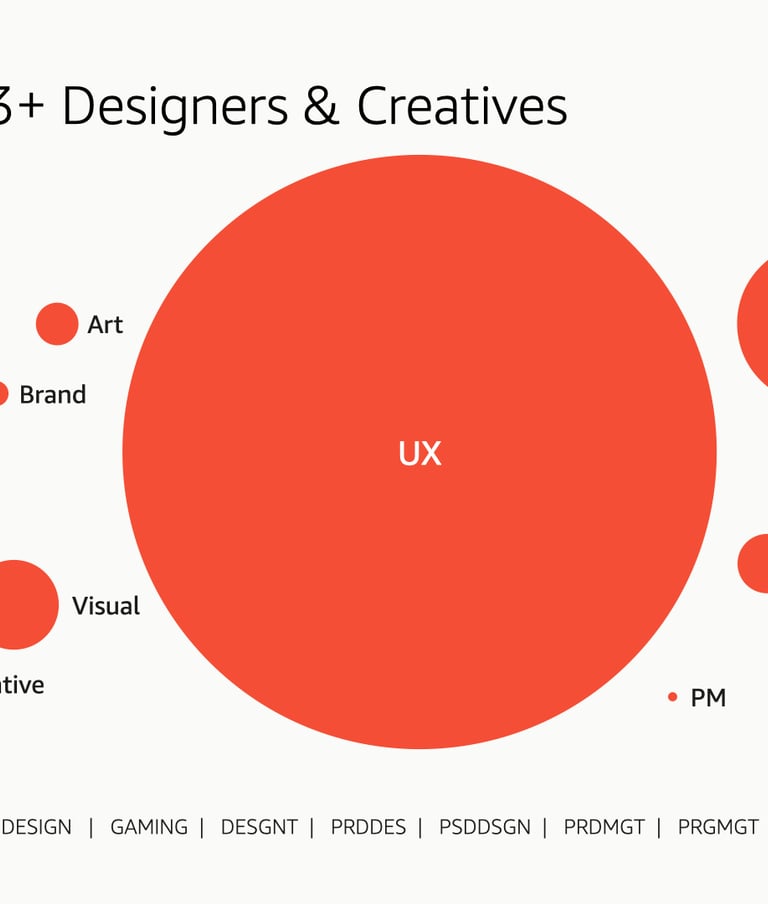
The design and creative community at this time had expanded north of 4500 people from a variety of disciplines. This turns into a multi-dimensional hypercube pretty fast but in addition to discipline, you can also slice our audience by internal vs external, region, team size, embedded resource vs service model, career stage, and IC versus manager.
To illustrate the scope of this challenge, consider the needs of a University Hire Visual Designer versus a Senior UX Research Manager.
With that said our best approach was to target the meaty middle and build out from there.
Surveys and 1x1s
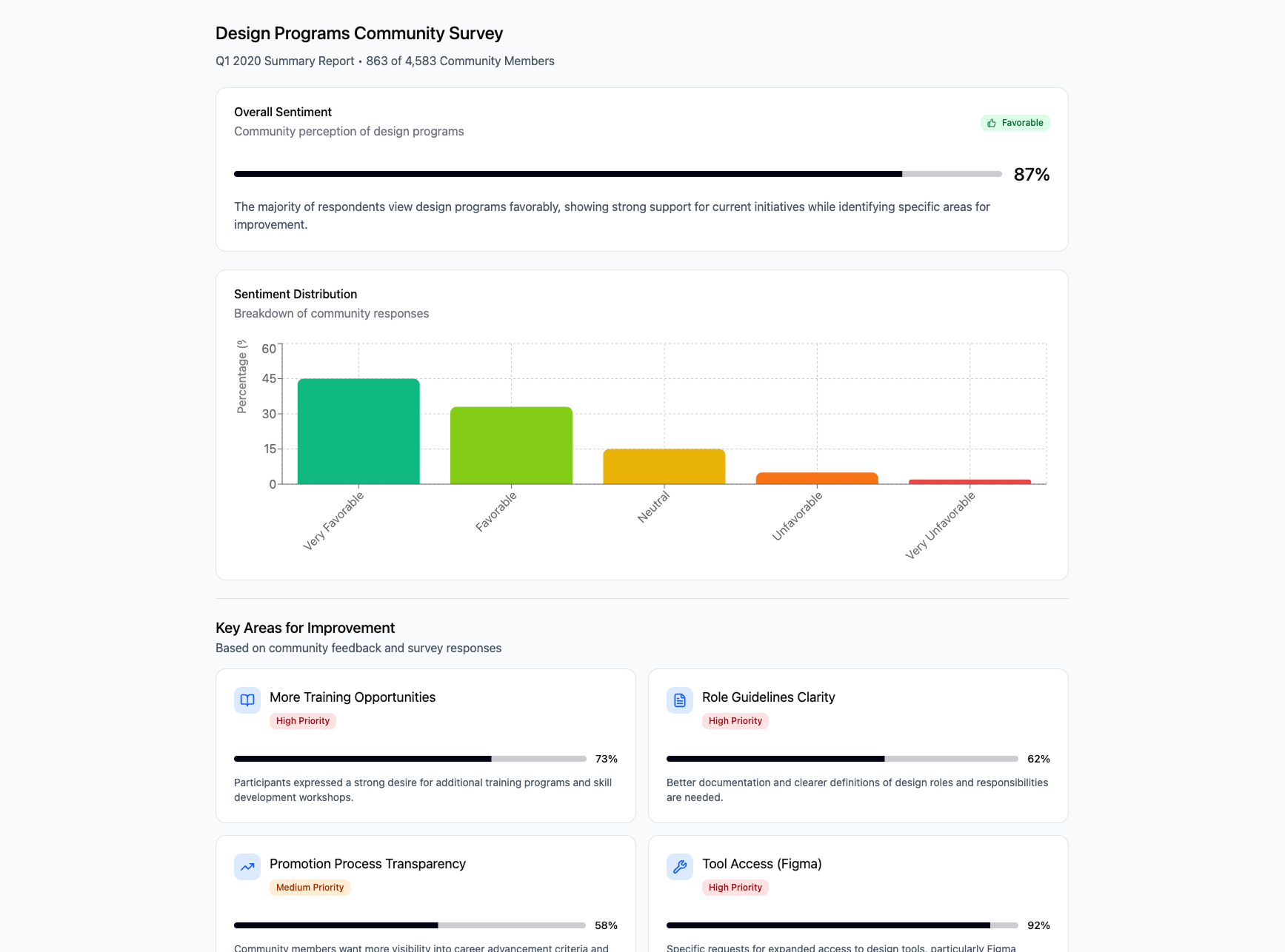
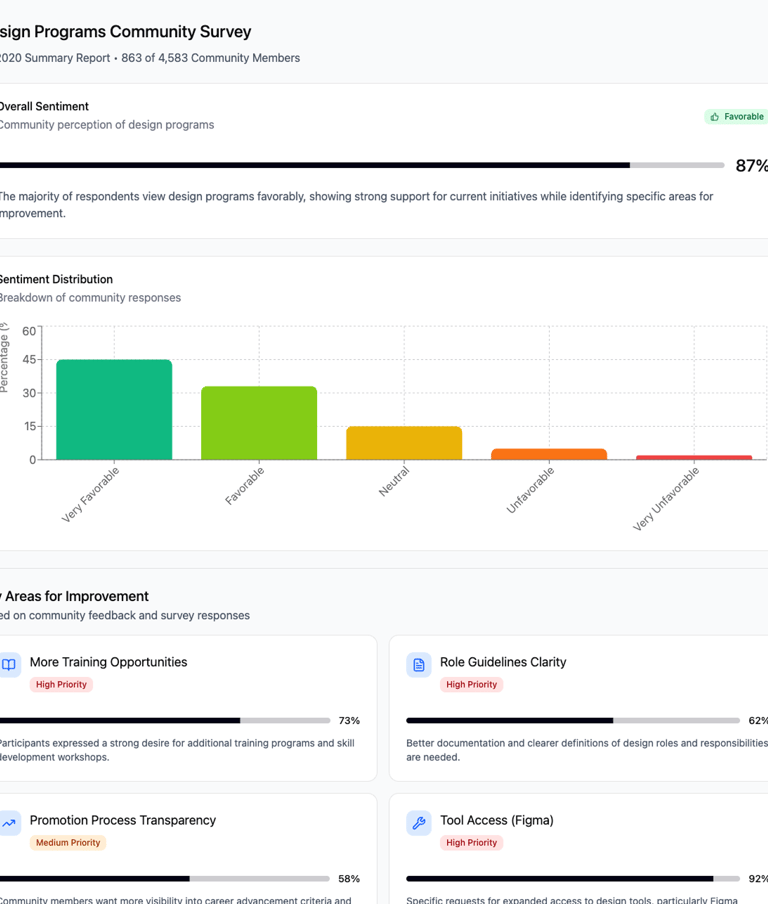
Following analysis of historical program affinity data and years of anecdotes collected during our annual design conference (Conflux), we conducted a global community survey and targeted one on one interviews with senior design leadership (L8 Directors and the L10 Design VP). This effort successfully identified key priorities and secured the funding and support required for future program development.
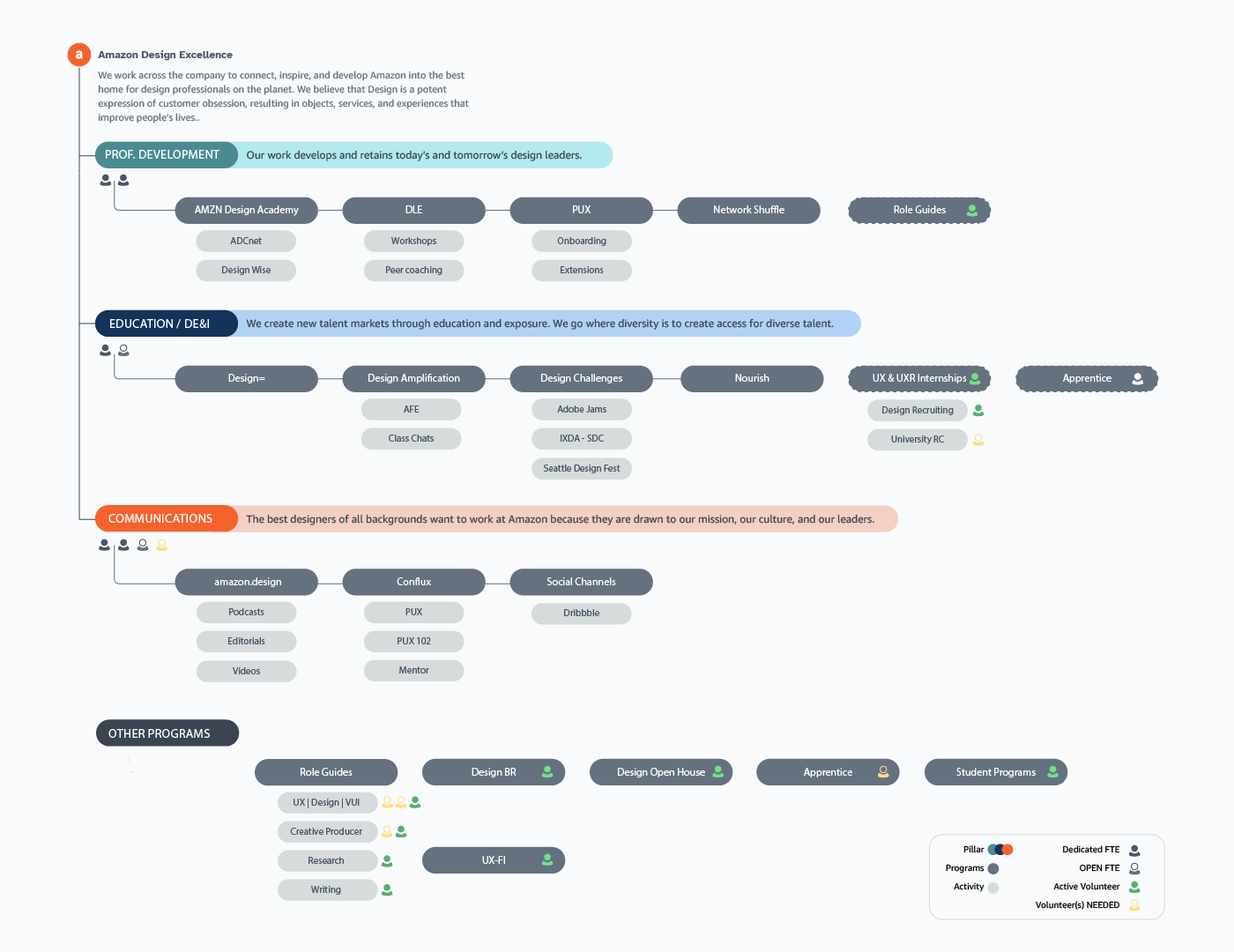
Condensing and Reorganizing
The survey data confirmed my suspicion that career development programs were far more important to Amazon Designers over ethereal (albeit important) feel-good, inspirational programming. Especially when distancing was the norm of the day, people got real tactical and pragmatic.
This was an early take at a taxonomy and staffing plan with distinct categories for programs to slot into.
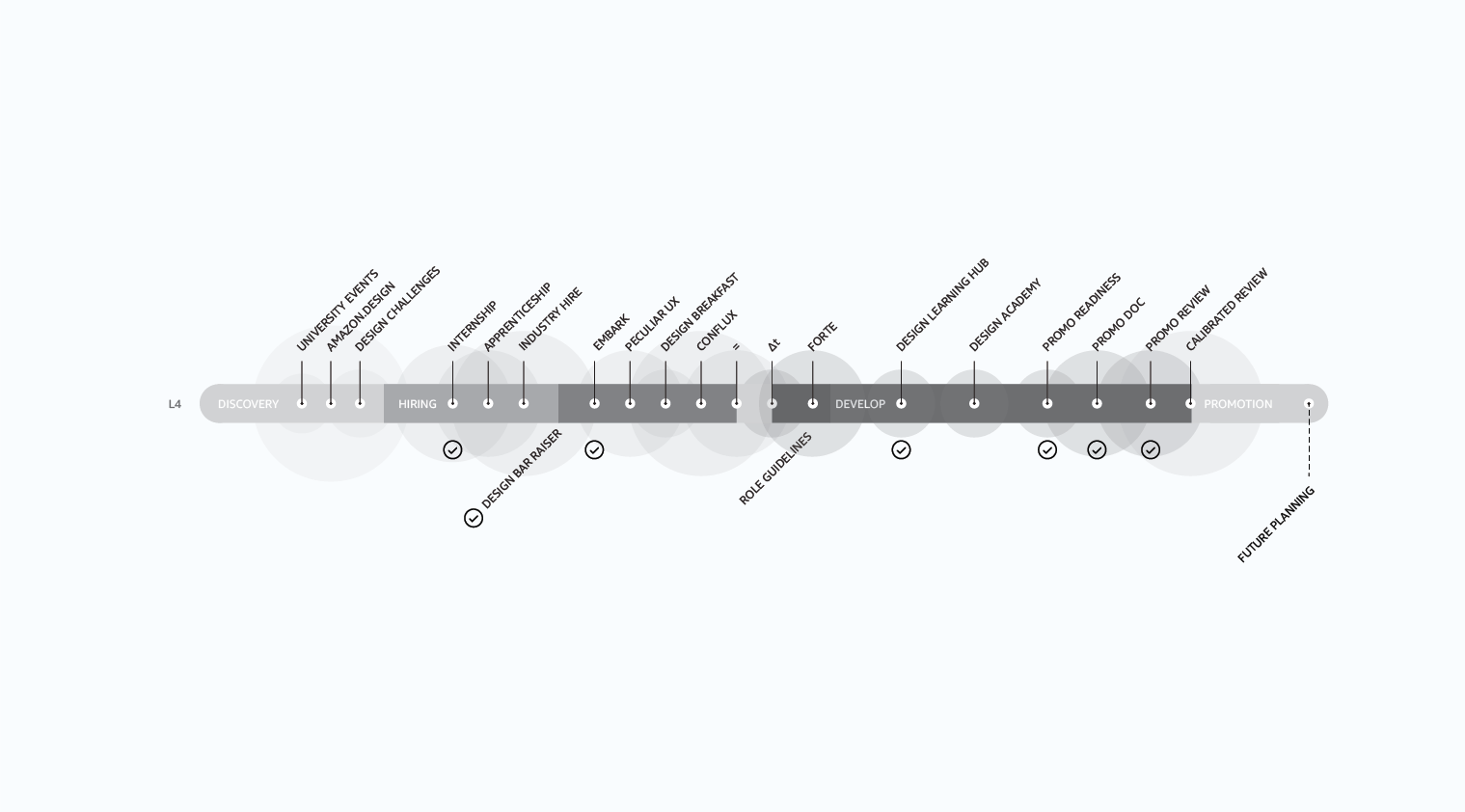
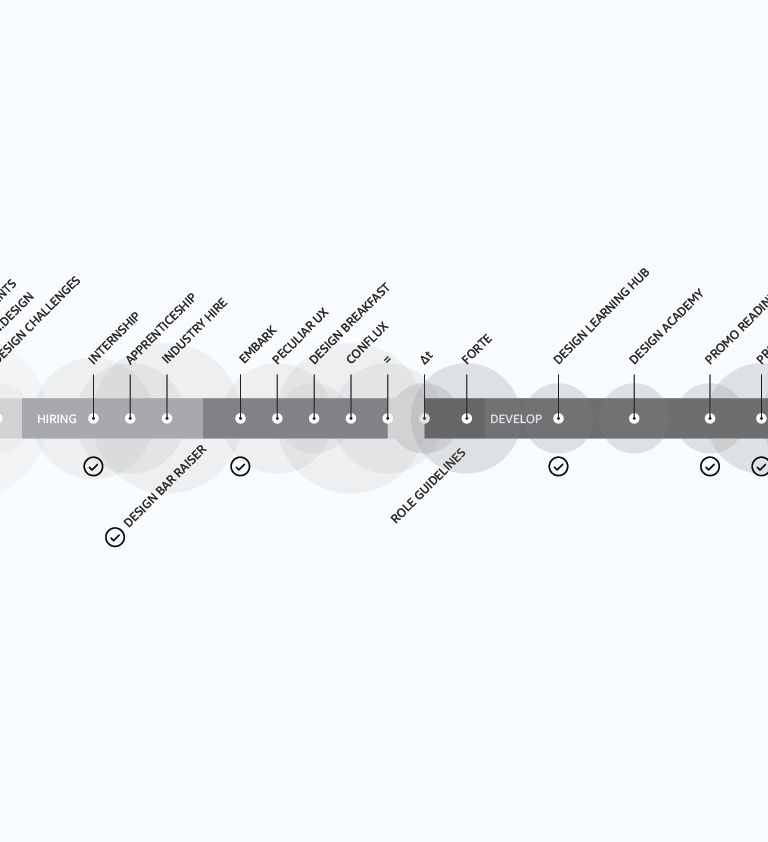
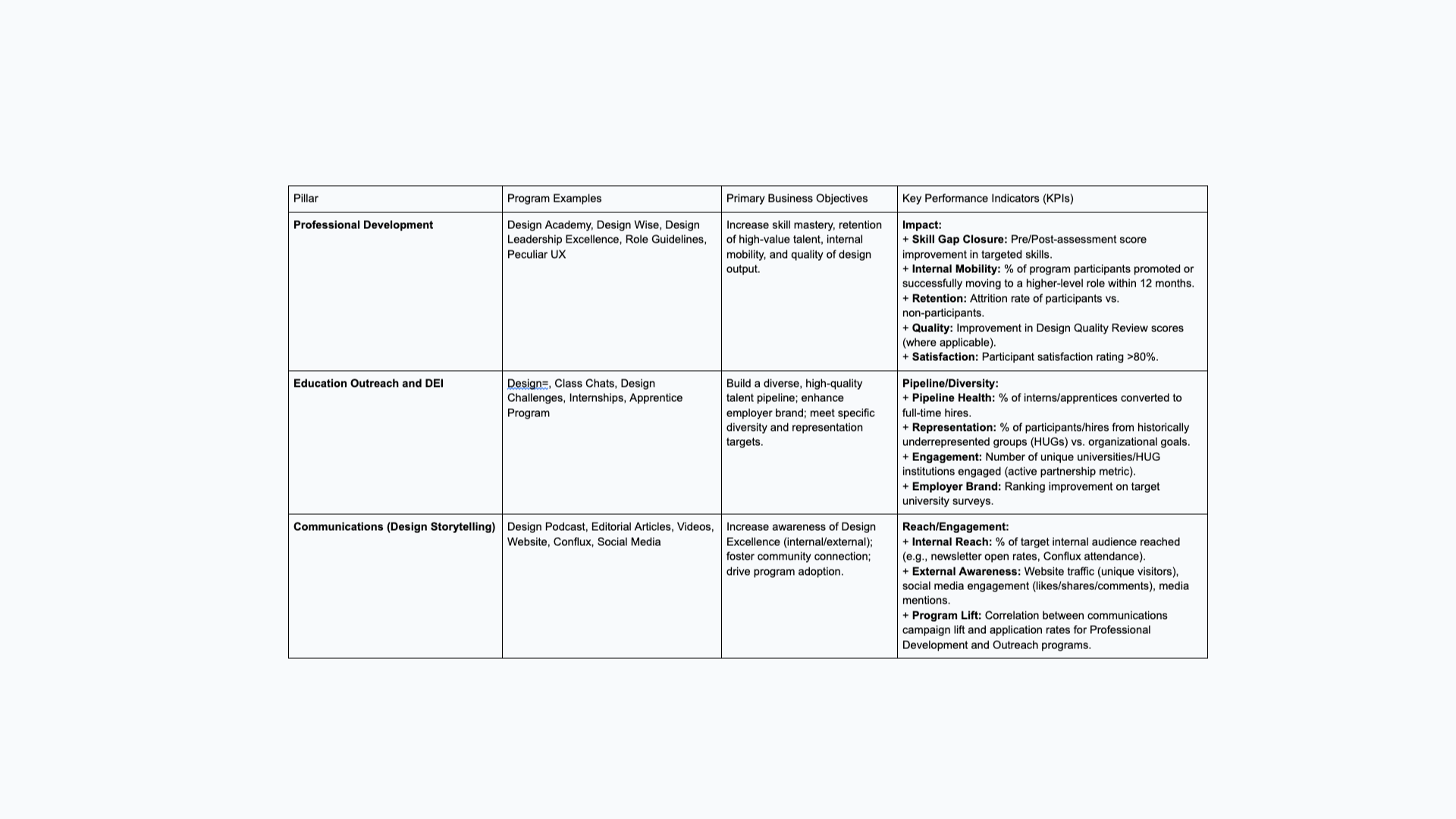
Measures of Success
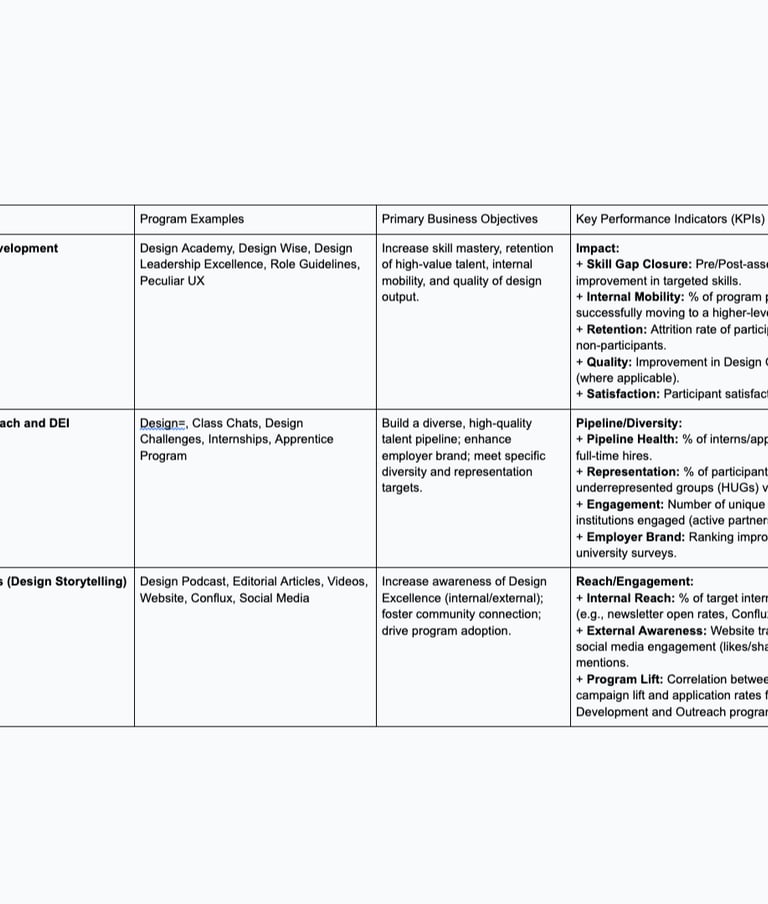
To guide the continuous improvement of the Design Excellence operating system, we created KPIs for each program and aggregated them by pillar. These metrics made sure the programs were not just "good intentions" or "busy work" but were making measurable business and community impact.
The Roll Out
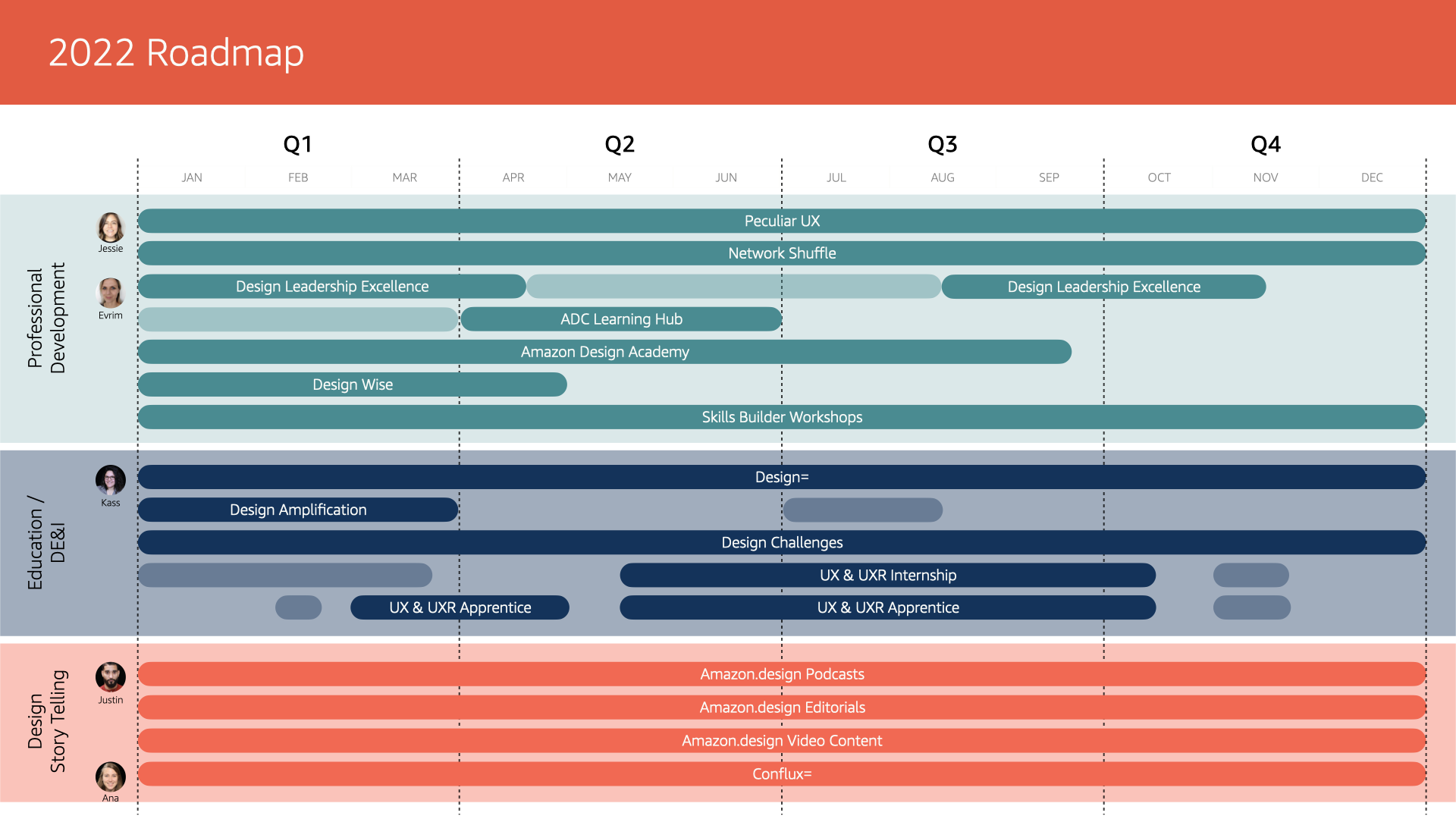
We rolled out the new Design Excellence programs in phases to learn fast and tweak things as we went. Once a program showed it was meeting key goals—mostly through affinity measures like CSAT—we officially documented it, scaled it up, and added it to our cycle of continuous improvement to make sure the impact lasted and we weren't wasting resources.
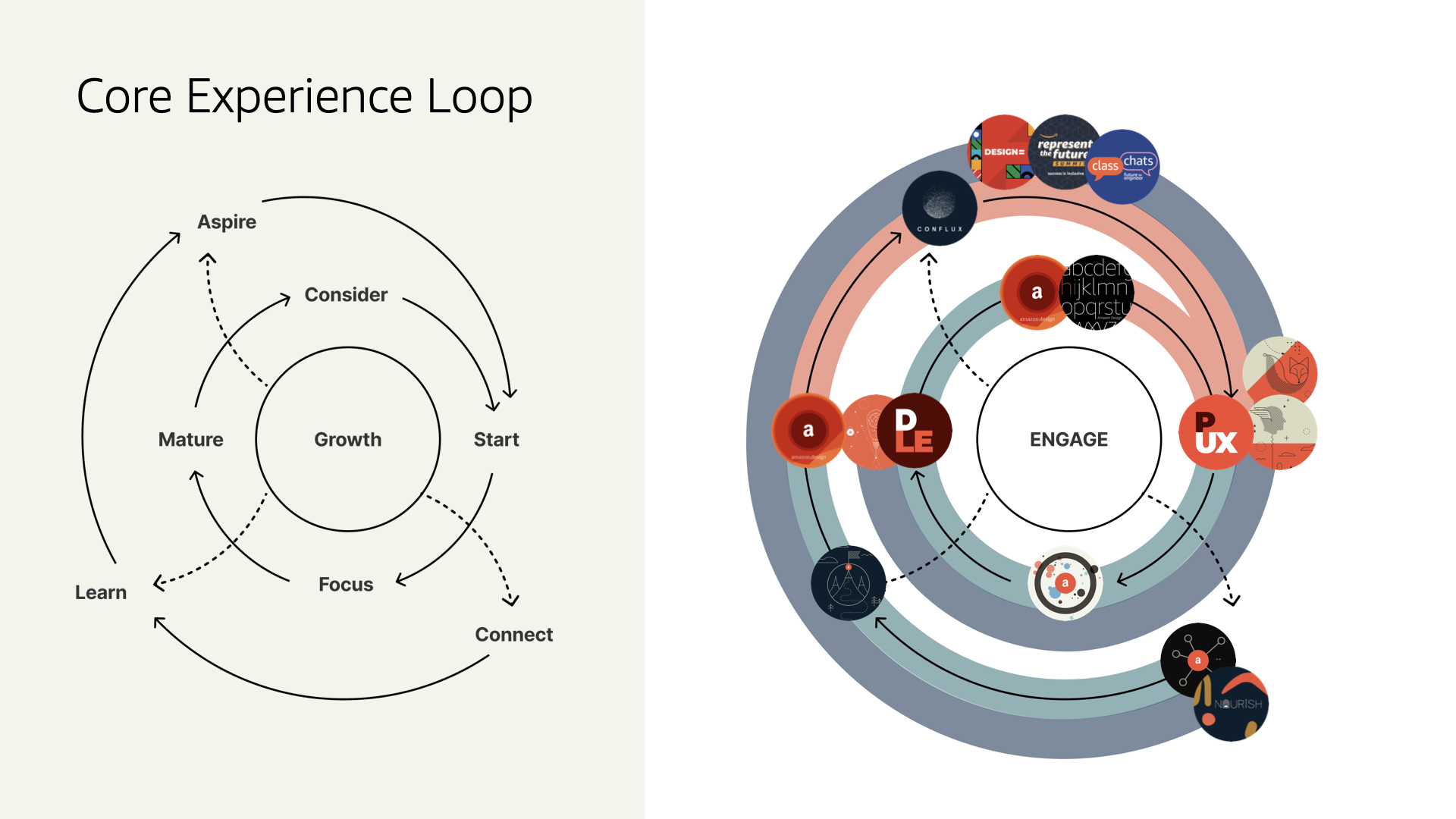
A Flywheel of Engagement
Each offering had a benefit for both participants and the business, and there was a nice connection that tied them all together, leading to the next offering. (diagram courtesy of Evrim Demir)
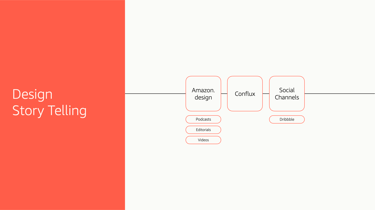
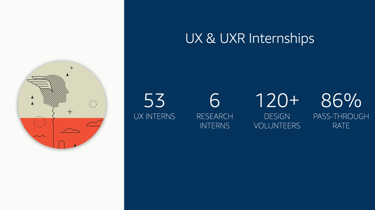
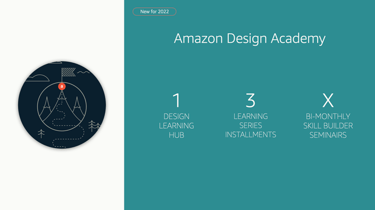
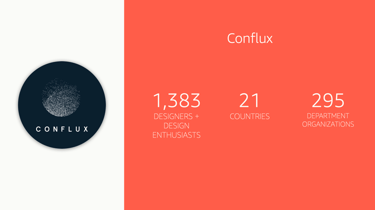
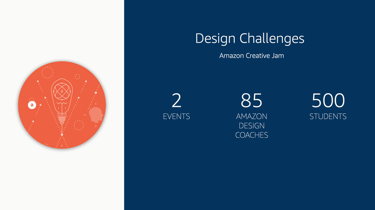
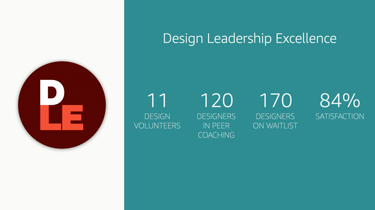
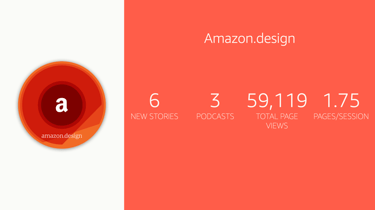
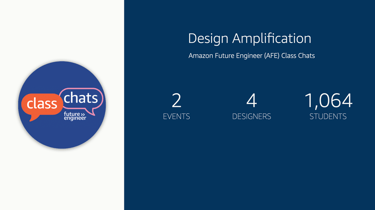
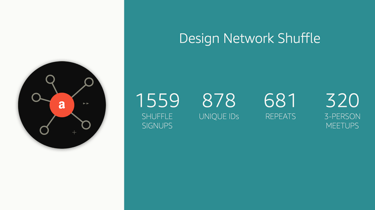
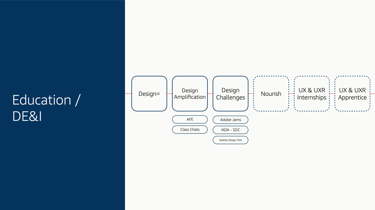
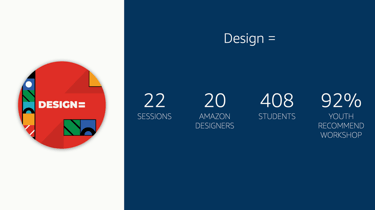
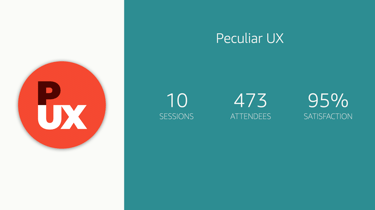
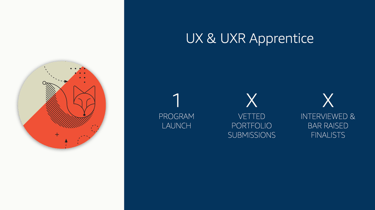
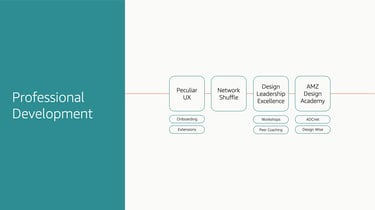
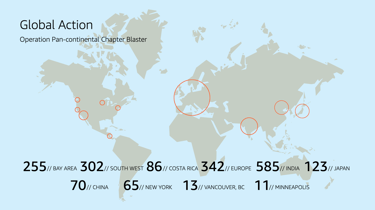
We completely overhauled Amazon Design Community (ADC), moving it from fragile, volunteer-led initiatives to the formalized ADX operating system. By securing dedicated staffing and budget, we achieved stabilization and immediate scaling. The data confirms the shift's success: internal connection scores (especially the "I feel connected" and "I have access to the right tools and training" metrics) improved significantly, directly resolving major trust issues. Furthermore, we accelerated skill-gap closure and began building a high-quality, diverse talent pipeline through formalized University Outreach. Ultimately, replacing unstable, informal efforts with a solid, data-informed mechanism allowed Design Excellence to achieve true impact at Amazon.
Results
Sample Program Status Summary
Lastly, I made sure to roll up program status in a report structure that was comprehensive yet glanceable. Each program ladders up to objectives and you can see how the prior year performed and plans for the following year. This example is a redacted version of the executive summary, used as an input and supporting exhibit for operational planning.